

If you are looking for a Bitly alternative, you may be wondering whether it can do more than shorten long URLs. One feature that has become increasingly important is QR code generation. Businesses, marketers, event organizers, content creators, and even individuals often want to turn a shortened link into a QR code that people can scan with their phones. This makes it easier to connect printed materials with online content.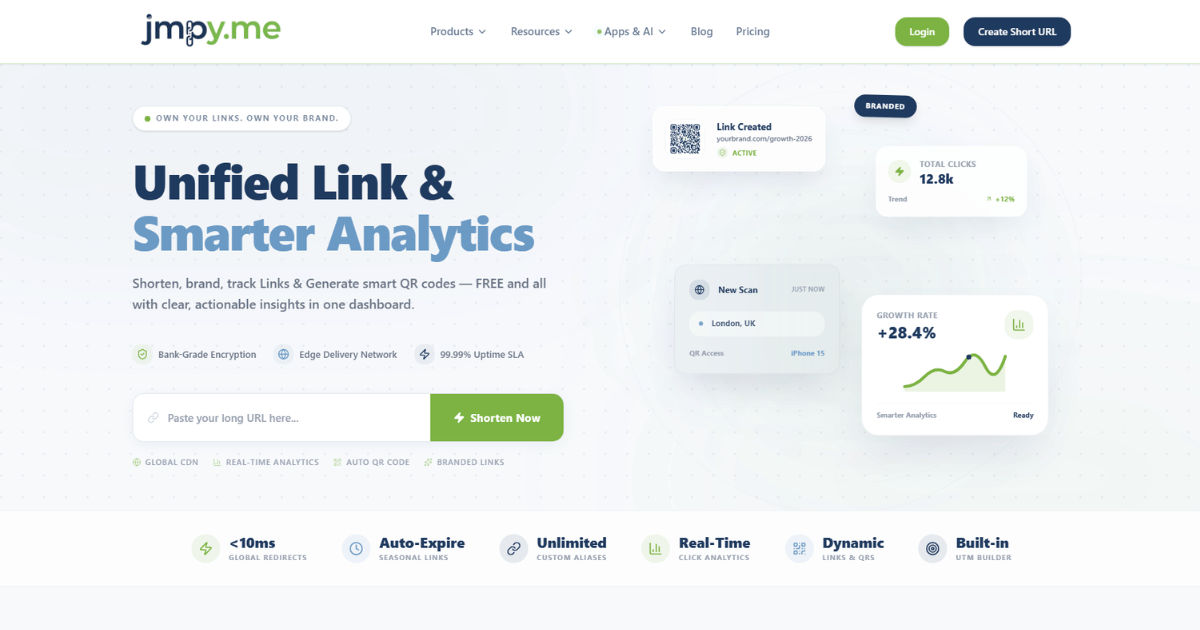
The good news is that many modern link-shortening platforms offer QR code creation as part of their services. However, not every URL shortener works in exactly the same way. Some platforms automatically create a QR code when you shorten a link, while others provide QR code generation as a separate feature. Some also allow you to customize the QR code, track scans, change the destination URL later, or create branded codes.
Understanding how these features work can help you choose the right tool for your needs. A QR code may look simple on the surface, but there are important differences between a basic static QR code and a dynamic QR code connected to a short link.
This guide explains whether a Bitly alternative can create QR codes, how the process works, what features to look for, and when using a link-shortening service with QR codes makes sense.
What Is a QR Code?
A QR code is a two-dimensional barcode that can store information in a pattern of black and white squares. Most commonly, QR codes contain website URLs, but they can also be used for contact information, text, Wi-Fi details, payment information, app links, and other types of digital content.
When someone scans a QR code using a smartphone camera or QR scanning application, the encoded information is read and displayed. If the QR code contains a website address, the phone will usually offer to open that page in a browser.
QR codes are popular because they remove the need to type a long web address manually. Instead of entering a complicated URL, a person can simply point their phone at the code.
This makes QR codes particularly useful in physical marketing. A company can place a QR code on a business card, product package, poster, brochure, restaurant menu, billboard, or event ticket.
The person viewing the printed material can scan the code and immediately access the related digital content.
Can a Bitly Alternative Create QR Codes?
Yes, many link-shortening services can create QR codes.
The exact functionality depends on the platform. Some services combine URL shortening and QR code generation into one workflow. You enter a long URL, create a short link, and then generate a QR code connected to that shortened address.
Other services may provide QR code creation as an additional tool. In that case, you may first shorten your URL and then use the platform's QR code generator to create a scannable code.
This combination is useful because a short URL and a QR code can serve different audiences.
Someone viewing a digital advertisement can click the short link.
Someone seeing a printed advertisement can scan the QR code.
Both can lead to the same destination.
A good Bitly alternative may also offer analytics, allowing you to see how people interact with the link or QR code. Depending on the platform, you may be able to monitor total scans, clicks, geographic information, devices, referral sources, and other statistics.
However, it is important to understand that QR code functionality is not automatically available with every URL shortener. If QR codes are important to your marketing strategy, you should check the platform's current feature set before choosing a service.
How Does QR Code Generation Work With a Short Link?
The process is generally straightforward.
First, you have a destination URL. This could be a product page, blog post, registration form, social media profile, online menu, landing page, or any other web page.
You enter the URL into a link-shortening service.
The platform creates a shorter web address that redirects visitors to the original destination.
The QR code is then created using that short URL.
When someone scans the QR code, their phone reads the short URL. The browser opens the short address, and the shortening service redirects the visitor to the final destination.
The process looks like this:
Long URL → Short Link → QR Code → Scan → Short Link → Destination Page
This approach can provide an important advantage over creating a QR code directly from a long URL.
If the QR code is connected to a dynamic short link, the destination may be changeable later without printing a completely new QR code.
Static QR Codes vs. Dynamic QR Codes
One of the most important things to understand is the difference between static and dynamic QR codes.
A static QR code stores the destination information directly in the code. Once it has been created and printed, the destination generally cannot be changed.
For example, imagine that you create a static QR code for a restaurant menu. You print 5,000 copies of the code and distribute them to customers.
Later, you change the menu URL.
The old QR code may still point to the original address. If the old page no longer exists, customers could encounter an error.
A dynamic QR code works differently.
Instead of directly storing the final destination, the QR code usually points to a short URL controlled by a service. That short URL then redirects users to the current destination.
If the destination changes, you can update the redirect without changing the QR code itself.
This can be extremely useful for printed marketing materials.
For example, a company might print one QR code on product packaging. The QR code initially sends customers to a product information page. Later, the company could redirect visitors to a warranty registration page, promotional offer, or updated product guide.
The printed QR code remains the same.
This flexibility is one reason why businesses often prefer dynamic QR codes.
Why Use a Bitly Alternative for QR Codes?
There are several reasons someone might choose a Bitly alternative that includes QR code functionality.
The first is convenience.
Instead of using one platform for URL shortening and another for QR code generation, you may be able to manage everything from one dashboard.
The second reason is tracking.
If the QR code is connected to a trackable short link, you may be able to monitor how many people scan it or visit the destination.
This information can help you understand whether a printed campaign is actually working.
For example, suppose you place QR codes on 1,000 flyers. Without tracking, you may have no clear way to determine how many people used them.
With analytics, you may be able to see how much traffic the campaign generated.
The third benefit is flexibility.
Dynamic QR codes can allow you to change the destination without replacing the printed code.
The fourth advantage is branding.
Some platforms let businesses customize short links or QR codes with brand elements. This can make the code look more professional and recognizable.
What Features Should You Look For?
Not every QR code generator offers the same features. If you are choosing a Bitly alternative, consider more than just whether it can produce a QR code.
One important feature is dynamic destination management.
If you plan to use QR codes on printed materials, the ability to update the destination later can be extremely valuable.
Analytics are another important consideration.
Look for information that helps you understand campaign performance. Depending on the service, analytics may include scans, clicks, locations, devices, dates, and referral information.
Customization can also be useful.
Some platforms allow you to adjust QR code colors, add logos, change shapes, or create branded designs. However, customization should never come at the expense of scan reliability.
The code must remain easy for smartphones to read.
Another feature to consider is export quality.
If you are printing a QR code on a large poster or billboard, you need a high-resolution file. Vector formats can be particularly useful for professional printing because they can be scaled without becoming blurry.
You should also consider the platform's reliability.
A QR code that depends on a third-party redirection service is only useful while that service continues operating. If the service experiences long-term problems or shuts down, the QR code may stop working.
For long-term campaigns, the stability and reputation of the provider matter.
How to Create a QR Code Using a Bitly Alternative
The exact steps differ between platforms, but the general process is simple.
Start by identifying the web page you want people to visit.
This might be your homepage, a specific product, an event registration form, a digital menu, or a promotional landing page.
Next, create a shortened URL using your chosen service.
Once the short link has been generated, look for an option related to QR codes. It may be labeled "QR Code," "Create QR," "Generate QR," or something similar.
Select the option to generate the code.
If customization is available, you may be able to adjust its appearance. Keep the design simple enough for reliable scanning.
Download the QR code in an appropriate format.
Before printing it, test the code with several different smartphones.
Do not assume that a QR code works simply because it was generated successfully. Testing is an important part of the process.
Scan it from different distances and under different lighting conditions.
If you plan to print it on a brochure, test a printed sample rather than testing only the digital file.
Can You Track QR Code Scans?
Many services can provide some level of QR code tracking, particularly when the QR code is connected to a shortened URL.
This can help answer practical marketing questions.
How many people scanned the code?
When did people scan it?
Where were the scans coming from?
What types of devices were used?
Which campaign generated the most activity?
The exact information available depends on the platform and its privacy policies.
Tracking can be particularly useful for offline campaigns.
For example, imagine a business runs three advertising campaigns.
One QR code appears on a poster.
Another appears on a printed brochure.
A third appears on product packaging.
If each campaign uses a separate trackable short link, the business may be able to compare their performance.
This turns a traditionally difficult-to-measure offline campaign into something that can be evaluated using digital analytics.
Can You Change the Destination After Printing?
With dynamic QR codes, the answer is often yes.
This is one of the strongest reasons to use a QR code connected to a managed short link.
Suppose you print a QR code on 10,000 business cards.
The QR code points to a particular webpage.
Six months later, you redesign your website and the original page changes.
If the QR code uses a dynamic redirect, you may be able to update the destination from your account.
The QR code itself does not change.
The printed business cards can continue to be used.
However, you should always verify the exact terms of the service you choose. Some providers offer dynamic QR codes only on paid plans, while others may limit the number of editable destinations or active campaigns.
Are QR Codes Free?
QR code creation can be either free or paid.
Some platforms allow users to create basic QR codes at no cost.
Others include QR code functionality only with premium subscriptions.
The important distinction is between simply generating a QR code and managing it over time.
A basic static QR code can often be created for free because it does not require an ongoing service.
Dynamic QR codes may involve recurring costs because the provider has to maintain the redirection system, analytics infrastructure, and management dashboard.
If you are creating a QR code for a temporary personal project, a free solution may be sufficient.
If you are running a business campaign that will remain active for years, paying for reliable management may be worthwhile.
Before choosing a service, check whether the QR code continues working after a free trial ends. This is particularly important if you plan to print thousands of copies.
What Are the Benefits for Businesses?
Businesses can use QR codes in many practical ways.
Restaurants can connect customers to digital menus.
Retailers can send shoppers to product information.
Real estate agents can link property signs to online listings.
Event organizers can direct visitors to registration pages.
Hotels can provide information about services and amenities.
Manufacturers can connect product packaging to instructions or warranty pages.
Small businesses can place QR codes on business cards.
The advantage is that the physical and digital worlds become connected.
A person can see something offline and immediately access more information online.
For businesses, the combination of QR codes, short links, and analytics can create a more measurable customer journey.
What Are the Limitations?
Although QR codes are useful, they are not perfect.
One limitation is that people still need a reason to scan them.
A QR code placed randomly on a poster may not receive much attention.
The surrounding message matters.
Instead of simply placing a QR code on an advertisement, explain what happens when someone scans it.
For example, a business could say "Scan to view today's menu" or "Scan to register for the event."
A clear call to action gives people a reason to interact.
Another limitation is scanability.
If a QR code is too small, blurry, distorted, or placed on a complicated background, smartphones may struggle to read it.
Poor contrast can also create problems.
Design should support functionality rather than interfere with it.
There is also the issue of platform dependence.
If your QR code relies on a shortening service, the code depends on that service continuing to operate.
This is why choosing a reliable provider is important.
How Large Should a Printed QR Code Be?
There is no single size that works for every situation.
The correct size depends on the scanning distance and the quality of the printed material.
A QR code on a business card can be relatively small because people normally hold the card close to their phones.
A QR code on a large poster may need to be much bigger because viewers may be several feet away.
A billboard requires even more careful planning because people may be viewing it from a significant distance.
The general rule is simple: the farther away the person is, the larger the QR code needs to be.
Always test the actual printed design before producing large quantities.
How Can You Make QR Codes Easier to Scan?
Good QR code design is mostly about avoiding unnecessary complications.
Use strong contrast between the code and its background.
Leave enough empty space around the code.
Do not make the code unnecessarily small.
Avoid placing it over a busy photograph.
Do not distort the proportions.
If you add a logo, make sure it does not cover too much of the code.
Test the final design using multiple smartphones.
It is also a good idea to test under realistic conditions.
If the QR code will appear outdoors, test it in bright sunlight.
If it will appear on a restaurant table, test it under indoor lighting.
If it will be printed on glossy packaging, test the actual packaging material.
A QR code that works perfectly on a computer screen may behave differently when printed.
Should You Use a Custom Short Link?
A custom short link can make a campaign look more professional.
For example, a business may prefer a short, recognizable branded domain instead of an unfamiliar collection of characters.
This can increase trust when the link is visible in printed materials or shared verbally.
A custom short link can also make it easier to remember and communicate.
However, QR codes reduce the importance of manually reading the URL because the user does not need to type it.
Even so, a branded short link can be useful as a backup.
You can place the short link below the QR code so that people who cannot scan it can type the address manually.
What Should You Avoid When Creating QR Codes?
One common mistake is changing the destination without testing the new page.
A QR code may technically work while sending visitors to a broken or irrelevant destination.
Always test after making changes.
Another mistake is relying entirely on QR codes without providing context.
People are more likely to scan when they understand the benefit.
Poor placement is another problem.
A QR code hidden in a corner or placed where it is difficult to reach may not perform well.
You should also avoid unnecessary customization.
Adding too many visual effects can reduce scan reliability.
The most attractive QR code is useless if nobody can scan it.
Finally, avoid printing large quantities before testing.
A small test print can reveal problems that are difficult to notice on a computer screen.
Is a Bitly Alternative Better Than a Separate QR Code Generator?
There is no universal answer.
It depends on your goals.
If you only need a simple QR code once, a dedicated QR generator may be enough.
If you want short links, QR codes, analytics, and destination management in one place, a combined platform may be more convenient.
Using one service can simplify campaign management.
Instead of checking multiple dashboards, you can manage your links and QR codes together.
This may be especially useful for businesses that run many campaigns at the same time.
However, you should compare pricing, analytics, customization, redirect controls, reliability, and terms before making a decision.
The best option is the one that fits your actual requirements.
When Is a QR Code Connected to a Short Link Most Useful?
This setup is particularly valuable when the destination may change.
It is also useful when you want to measure offline activity.
Consider a printed advertisement.
Without a trackable QR code, you might know that the advertisement was distributed but not how many people interacted with it.
A dynamic QR code can provide a measurable connection between the printed advertisement and the online experience.
This can help businesses make better decisions.
If one campaign receives significantly more scans than another, the company can investigate why.
Perhaps the design was better.
Maybe the offer was more attractive.
Perhaps the QR code was placed in a more visible location.
Data does not automatically explain everything, but it gives you a starting point for analysis.
How Should You Choose the Right Platform?
Start by identifying your needs.
If you only need basic QR generation, you may not need a sophisticated subscription.
If you need dynamic QR codes, analytics, branded links, and multiple campaigns, look for a platform designed for those requirements.
Consider how many links you need to manage.
Think about how long your QR codes will remain active.
Consider whether you need to change destinations later.
Check the analytics available to you.
Review the download formats.
Look at the customization options.
Most importantly, understand the pricing model.
A service may appear inexpensive at first but become costly when you need more links, more scans, additional users, or advanced analytics.
Read the plan details carefully before committing.
Can QR Codes Replace Short Links?
Not completely.
QR codes and short links solve related but different problems.
A QR code is primarily designed for scanning.
A short link is designed for clicking, typing, sharing, or communicating.
They work particularly well together.
A printed advertisement might include both.
The QR code gives smartphone users a quick scanning option.
The short link gives users another way to access the same page.
This is a simple example of good accessibility.
Not everyone wants to scan a QR code.
Some people may prefer to type the address.
Giving users more than one option can improve the overall experience.
What Happens If the Shortening Service Stops Working?
This is an important consideration that is sometimes overlooked.
If your QR code points to a short URL controlled by a third-party service, that service is part of the path between the user and your website.
If the service experiences an outage, QR scans may fail.
If the service permanently shuts down, the QR code could become unusable.
This is why long-term projects should use a reliable provider.
For critical campaigns, you may also want to use a custom domain that you control. This can give you greater ownership over the short-link infrastructure.
The exact technical setup depends on the service, but the basic principle is simple: the more control you have over the link, the less dependent you are on a third party.
Are QR Codes Secure?
QR codes themselves are not automatically safe or unsafe.
They are simply a method of encoding information.
The risk comes from where the code sends you.
A malicious QR code could direct someone to a phishing website or another harmful destination.
This is why users should be cautious when scanning codes from unknown sources.
Businesses should also make sure their QR codes point only to legitimate destinations.
If you manage a campaign, regularly check that the destination is still correct.
A QR code printed on a poster may remain in circulation for months or years. The destination should be monitored throughout its active life.
How Can Marketers Use QR Code Analytics?
Analytics become useful when they are connected to clear campaign goals.
For example, a company might use separate QR codes for different locations.
One code could be printed on flyers distributed at a shopping mall.
Another could be used at a trade show.
A third could appear in a magazine advertisement.
If each QR code points to a separate trackable link, the company can compare the activity generated by each campaign.
This can help answer questions about marketing effectiveness.
However, analytics should be interpreted carefully.
A scan does not always mean a sale.
A click does not necessarily mean a customer.
The best approach is to connect QR analytics with other business metrics, such as registrations, purchases, inquiries, or downloads.
This creates a more complete picture of performance.
What Is the Future of QR Codes?
QR codes have already become a normal part of everyday life.
They are used in restaurants, transportation, retail, events, advertising, packaging, payments, and customer support.
Their continued popularity is partly due to how easy they are to use.
Modern smartphones generally make scanning simple.
Businesses also benefit because QR codes provide a bridge between physical experiences and digital services.
As link management platforms become more sophisticated, QR code tools are likely to become more integrated with analytics, personalization, campaign management, and other digital marketing features.
The basic technology may remain simple, but the systems built around it can become increasingly powerful.
Conclusion
So, does a Bitly alternative create QR codes?
In many cases, yes. A large number of modern URL-shortening platforms provide QR code generation either as a built-in feature or as part of a broader link-management system.
The real question is not simply whether a platform can generate a QR code. The more important question is what happens after the code is created.A basic QR code can send someone to a website, but a dynamic QR code connected to a managed short link can provide much more flexibility.
You may be able to change the destination later, track scans, measure campaign performance, and manage multiple QR campaigns from one place.For businesses, this can be particularly valuable.
A printed poster, brochure, business card, product package, or event display can become an entry point into a measurable digital experience.However, choosing the right solution requires some thought.
Look at whether the QR codes are static or dynamic. Check whether destinations can be changed. Review analytics capabilities. Consider customization options. Test the codes before printing. Think about the long-term reliability of the service.Also remember that technology alone does not guarantee results.
A beautifully designed QR code will not perform well if nobody knows why they should scan it. Always give users a clear reason to take action.A simple message such as "Scan to view the menu," "Scan to register," or "Scan to learn more" can make the purpose immediately clear. Ultimately, QR codes and shortened links work best when they are treated as part of a larger user experience rather than as isolated tools.
The QR code creates the physical-to-digital connection.
- The short link manages the journey.
- The analytics help you understand what happened.
- And the destination page delivers the actual value.
For anyone searching for a Bitly alternative, QR code creation can therefore be an important feature to consider. If your work involves printed marketing, events, packaging, signage, or offline promotions, having QR codes and link management in one system can save time and provide useful insights.
Before selecting a platform, think about your current needs and your future plans. A free QR code may be enough for a one-time personal project, while a business running long-term campaigns may benefit from dynamic QR codes, analytics, custom branding, and reliable link management.